From tennis shoes to dressy sandals to flip flops, the average person has a wide selection of footwear. And while it’s great to know that you have the perfect pair of shoes to go along with any outfit in your closet, it can be hard to find space to store them — especially if you live in a small house or apartment. Read on for eight of the best ways to store shoes in an entryway or mudroom.
1. Things to Consider for Your Entryway Shoe Storage Solution
Mudrooms — hallway-style entryways that typically include closets or built-in storage — are ideal for shoe organization. But many homes and apartments don’t have that kind of dedicated space, which means shoe storage often has to work a little harder
Fortunately, there are plenty of practical ways to keep footwear organized and within reach, even in small or high-traffic entryways. Before choosing a solution, take a moment to think through a few key factors:
-
Do you prefer your shoes on display or tucked out of sight?
-
Are you looking for a DIY project or a ready-made piece?
-
How many pairs do you wear regularly — and how many need longer-term storage?
Thinking through these details will help you make the most of the storage space you do have, without needing to get rid of any of your shoes.
Choose Shoe Storage Based on Household Size
A single-person household can often get away with a slim rack or a few baskets near the door. Families, couples or roommates usually need something more structured — like cubbies, benches with compartments and clearly labeled sections — to avoid shoes piling up in a shared drop zone. Matching your storage solution to the number of people using it helps prevent overflow before it starts.
Create a “Daily Shoes Only” Rule
To keep your entryway from becoming a catch-all, designate it for everyday footwear only. Think sneakers, work shoes and the pair you reach for most often. Special-occasion shoes, seasonal styles and rarely worn pairs should live elsewhere.
Rotate Shoes Seasonally to Free Up Space
Shoes you’re not wearing right now don’t need prime real estate. Swap out sandals in the winter and boots in the summer, and store off-season shoes in bins, closets or storage containers. Seasonal rotation instantly reduces clutter and helps your most-used shoes stay easy to access.

2. Storage Benches
If you live in a small house or apartment, every inch of your entryway needs to earn its keep. Furniture that doubles as storage is one of the easiest ways to make the most of limited space, and a shoe storage bench checks all the right boxes.
Shoes stay accessible but out of sight, which instantly makes the entryway feel more pulled together. You also get a convenient place to sit while putting on or taking off shoes. For extra functionality, add wall hooks above the bench to hold coats, bags or scarves. It’s a simple, clutter-conscious solution that works especially well in tight spaces.
3. Painted Wooden Crates
For a low-cost, customizable option, wooden crates or apple boxes can easily be turned into stackable shoe storage. Paint them to match your decor, or leave them natural for a more rustic look. If you’re feeling creative, stenciling a pattern or phrase adds personality without much effort.
Stacked vertically or arranged side by side, crates can hold multiple pairs of shoes while keeping everything visible and easy to grab. This approach works well for renters or anyone who wants a flexible setup that can be rearranged as needs change.
4. Dresser
This one’s for the DIY crowd. An old dresser can be repurposed into a hall tree or entryway storage piece with a little sanding and paint. Use the lower drawers or shelves for shoes, and reserve the upper space for everyday essentials like keys, gloves or mail.
Because dressers offer deeper storage than many traditional shoe racks, they’re especially helpful if you’re working with a larger collection. It’s a practical way to reuse furniture while adding substantial storage to your entryway.
5. Baskets
Sometimes the simplest solution is the most effective. Baskets are an easy, low-commitment way to corral shoes near the door. Choose sizes based on how many pairs you need to store, and opt for lidded baskets if you prefer a cleaner, more concealed look.
Wicker, woven or fabric baskets blend seamlessly into most decor styles, and they’re easy to swap out if your needs change.

6. Over-the-Door Shoe Racks
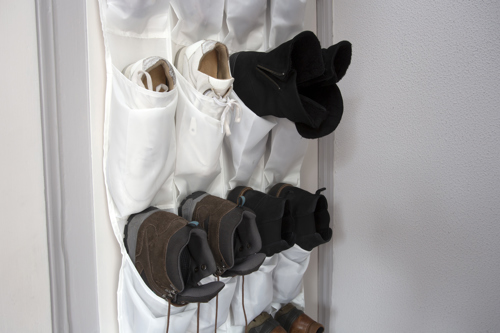
Over-the-door shoe racks are a longtime favorite for good reason — they maximize vertical space without taking up any floor area. Hang one over a closet, bedroom or bathroom door to keep shoes organized and easy to access.
Many racks include extra pockets that can also hold accessories like scarves or small bags. This setup is ideal for apartments or homes where entryway square footage is limited but storage demands are high.
7. Shoe Cubbies
Shoe cubbies offer a balance of structure and accessibility. Many designs include a bench-style top, giving you a place to sit while keeping shoes neatly separated below. Adding hooks or shelves above the cubby creates a complete entryway station for keys, bags and outerwear.
To soften the look, consider layering a cushion or throw on top. Shoe cubbies are especially helpful in shared households, where designated spaces help keep clutter from creeping in.
8. Storage Armoire
For those who prefer everything tucked away, a storage armoire provides a clean, streamlined solution. These pieces offer generous interior space while maintaining a polished, furniture-forward look.
An armoire works well in entryways that double as living spaces, where visible clutter can feel distracting. Styling the top with a lamp, plant or tray helps it feel intentional rather than purely functional.
9. Wall-Mounted Shoe Rack
If you’d rather keep your favorite pairs on display, a wall-mounted shoe rack offers easy access and visual appeal. Mounted directly to the wall or hung over a door, these racks keep shoes visible and organized without crowding the floor. This setup is especially convenient for frequently worn shoes — no digging or forgotten pairs.
10. Store Overflow Shoes Outside the Entryway
If your shoe collection exceeds what your entryway can realistically handle, it’s time to store overflow pairs elsewhere. Hall closets, under-bed containers, bedroom dressers or even off-site storage can help keep rarely worn shoes out of high-traffic areas. This approach is especially helpful in apartments or small homes where entryway space is limited.
For sneaker collectors or anyone storing valuable footwear, climate-controlled storage is worth considering. Temperature and humidity fluctuations can damage materials, adhesives and soles over time. Keeping collectible or investment-grade shoes in a stable environment helps preserve their condition — even when they’re not on display.